Refinery debottlenecking: how to find capacity for more feed
CHR engineering team,
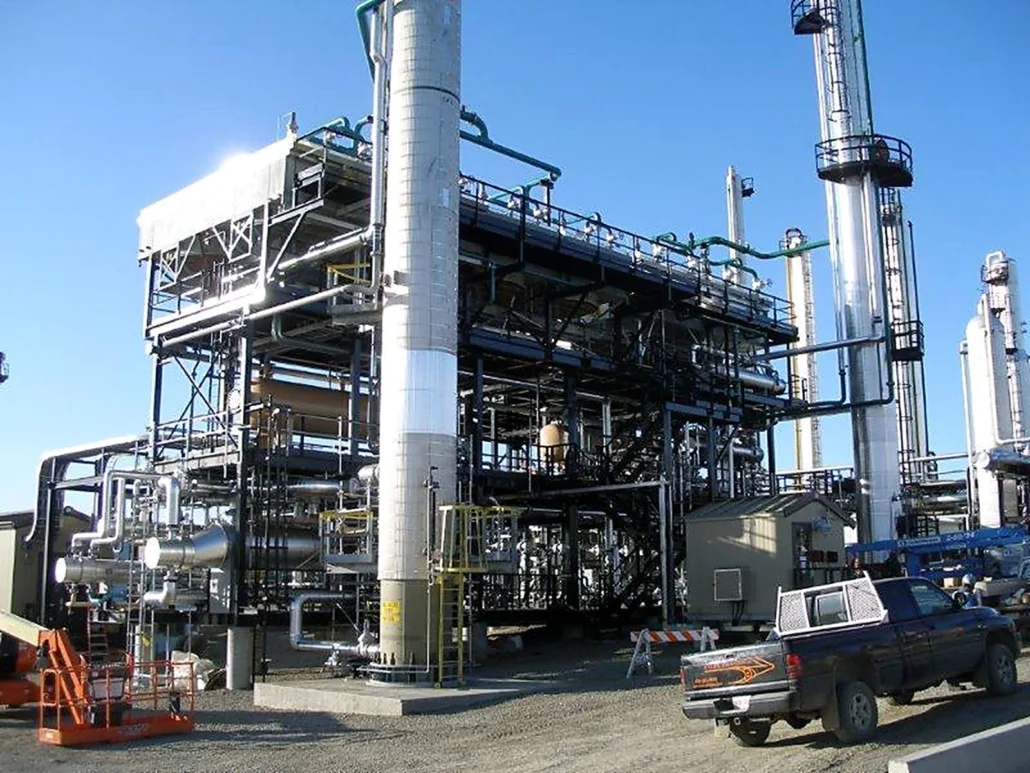
Debottlenecking means finding the equipment that limits a plant’s capacity and changing only what is necessary to reach a new throughput. It starts with a capacity review: every unit and major piece of equipment is checked against the new rates, the limits are ranked, and the cheapest set of changes that removes them becomes the project.
CHR personnel worked on the debottlenecking of the Mongstad refinery in Norway: a capacity review against a 60% feed increase, followed by detailed engineering for the crude and vacuum units, hydrocracker, hydrotreaters, delayed coker, and the sulphur and tail gas plants (350 t/d).
Step 1: define the new design basis
- New feed rate and crude slate (a heavier or more sour crude changes everything downstream)
- Product specifications and yields
- Utilities available: steam, power, cooling water, hydrogen, fuel gas
- Environmental limits: sulphur, emissions, flaring
Step 2: build and calibrate the models
Process simulation models (for example AspenTech HYSYS) of each unit are matched to actual plant data, so that predictions at the new rate can be trusted.
Step 3: rate every piece of equipment
Columns
Tray or packing flooding, downcomer capacity, entrainment.
Heat exchangers and furnaces
Duty, pressure drop, fouling margins, firing limits.
Pumps and compressors
Flow, head, driver power.
Piping, control valves and relief systems
Velocity, pressure drop, valve capacity, relief and flare loads.
Reactors and catalyst
Space velocity, hydrogen availability, pressure drop.
Step 4: rank the bottlenecks
The result is a list of limits in the order they are reached as feed increases. Some are cheap to remove (a control valve, an impeller, a tray change); others decide the project (a furnace, a column shell, a compressor).
Step 5: engineer the changes
Typical debottlenecking changes include:
- High-capacity trays or packing in existing column shells
- Larger or additional exchangers, or improved heat integration
- Pump impeller changes or new pumps
- Control valve and line size changes
- Relief and flare system upgrades for the higher loads
- More sulphur recovery capacity when more or sourer crude means more H₂S
The hidden bottleneck: sulphur and utilities
When throughput rises, so does the sulphur that must be removed and the hydrogen, steam and power needed. Sulphur recovery and utilities are often the limits that are found last and cost the most, so check them first.
See the Mongstad project, our Services for troubleshooting and debottlenecking, or contact us.
Frequently asked questions
How much extra capacity can debottlenecking find?
It varies widely. Small gains are often available from operating changes and minor equipment changes. Large increases, like the 60% reviewed at Mongstad, require substantial changes across several units.
Can debottlenecking be done without a long shutdown?
Much of the engineering and fabrication is done in advance so that the changes can be installed during a planned turnaround.
Does debottlenecking apply to gas plants too?
Yes. The same method applies to gas plants, compressor stations and oil batteries. See Adding equipment to a facility that can’t stop running.
Have a part number or a nameplate photo?
Request a quote