How to pack compressor and engine parts for shipment
CHR engineering team,
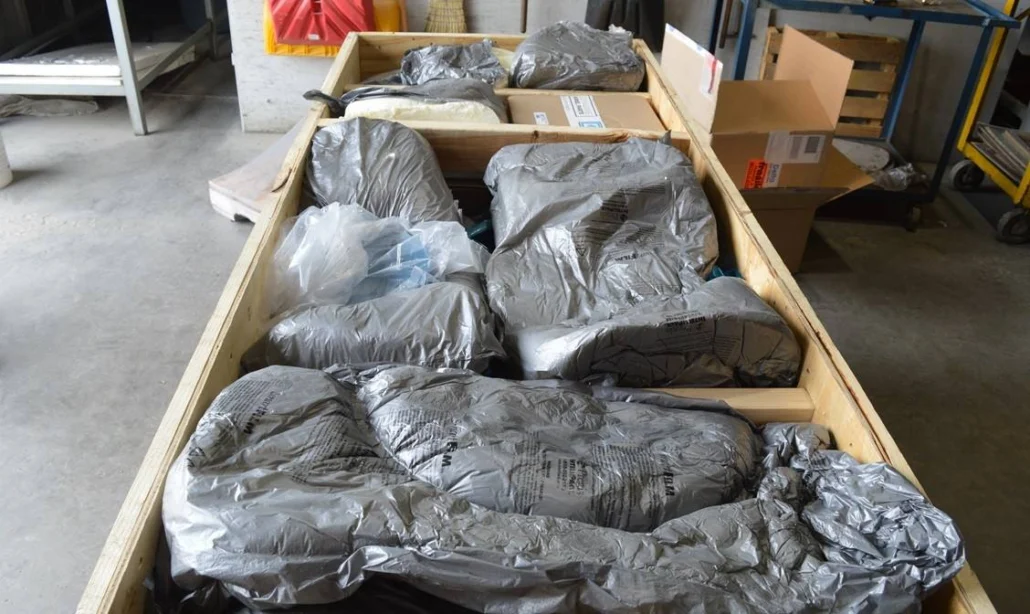
Equipment parts should travel in a strong wooden crate or on a pallet sized for the part, protected against corrosion with VCI (vapour corrosion inhibitor) bags or film, blocked and braced so nothing can move, cushioned where surfaces are machined, and clearly marked with weight, handling and destination. For export, the wood must be heat-treated and stamped to ISPM 15.
A part that arrives damaged or rusted is as bad as one that never arrives: it costs the same downtime. These are the practices we follow and ask our suppliers to follow.
1. Choose the right container
- Wooden crates for heavy, valuable or delicate parts, and for all sea freight
- Pallets with stretch wrap for boxed parts that can be stacked
- Skids for large single items such as pump or compressor assemblies
- The crate should be rated for the weight of the contents, with skids that allow forklift entry from at least two sides
2. Protect against corrosion
Sea freight and long storage expose machined steel to humidity and salt air. Condensation inside a closed crate can rust a part on a long voyage.
- VCI bags or film: release a vapour that protects steel surfaces inside a closed bag. Seal the bag and keep it closed until the part is installed.
- Rust-preventive coatings on machined surfaces, bores and shafts
- Desiccant bags in sealed packs for long transits
- Plugged openings: flanges, ports and nozzles closed with caps or blind covers
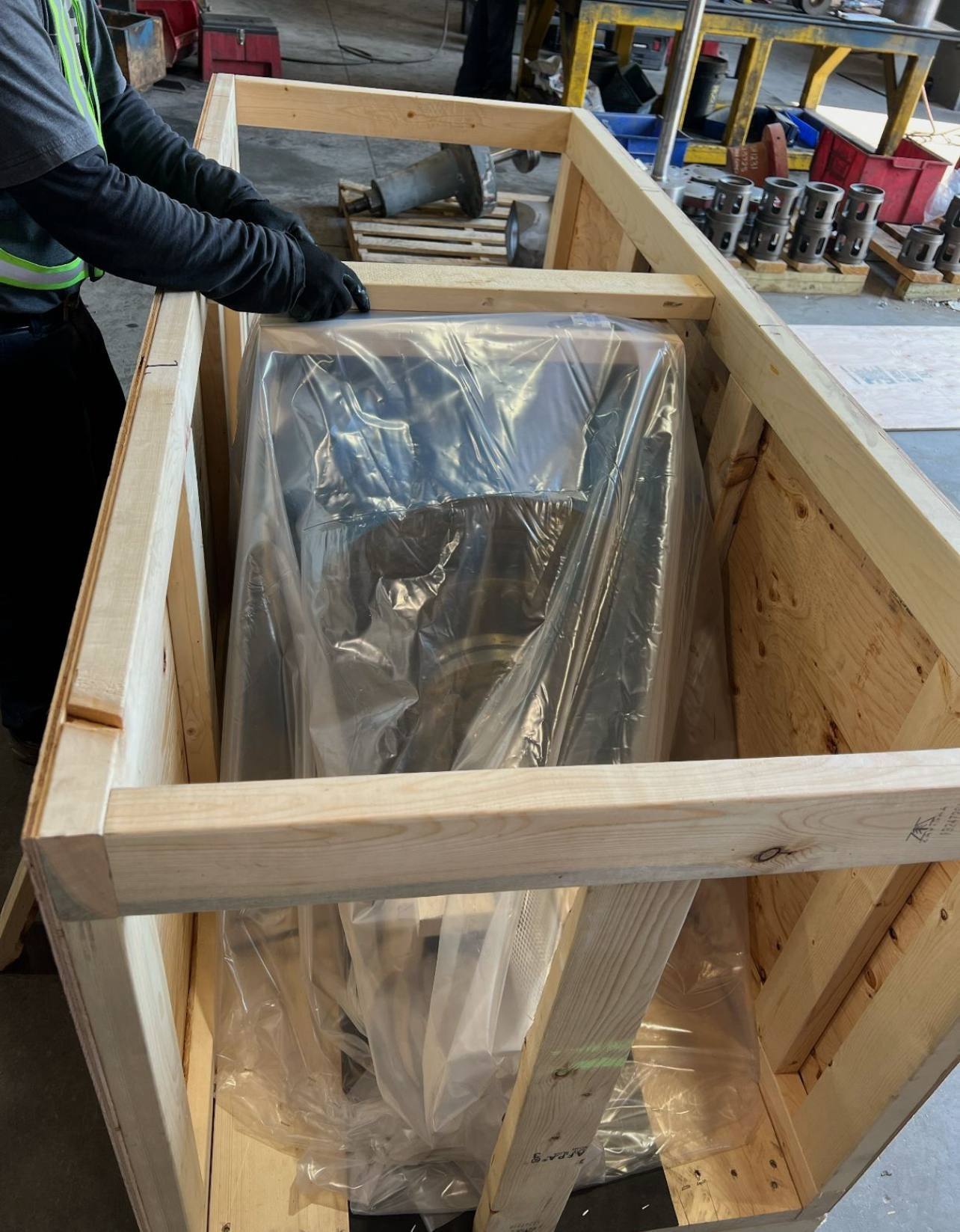
3. Block, brace and cushion
- Fix heavy items to the crate base with bolts or straps, so they cannot move when the crate is tilted or dropped
- Use timber blocking and bracing between items
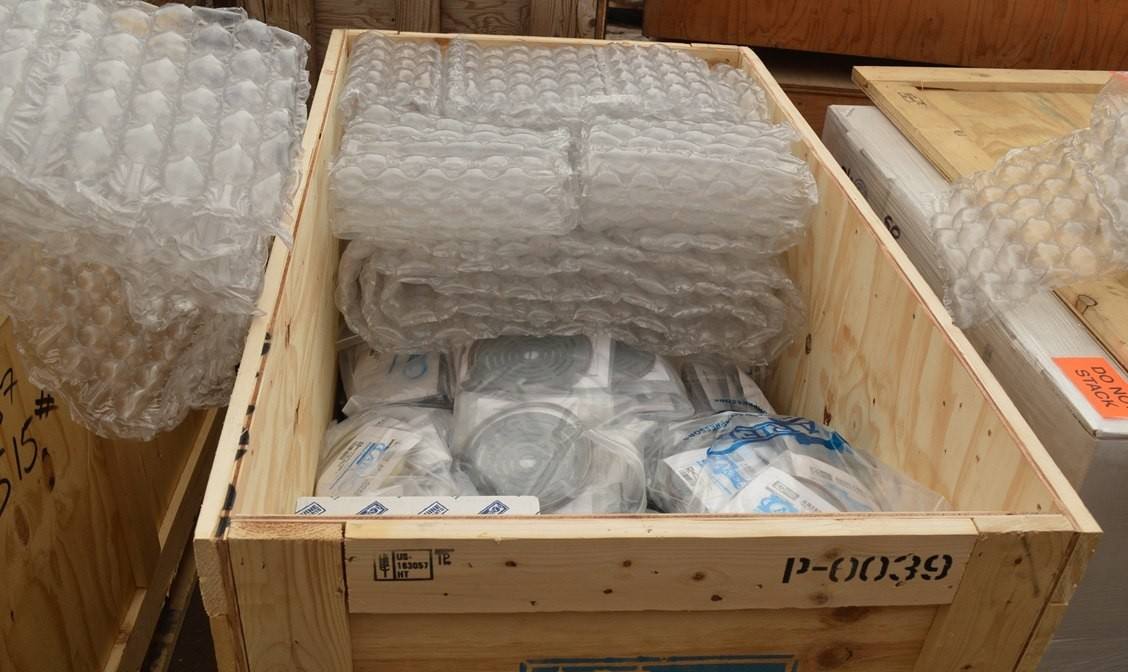
- Cushion small, precise parts with air cushions or foam; keep them in their original labelled bags
- Do not let parts touch each other or the crate walls
4. Mark and document
- Gross weight and centre of gravity for heavy crates
- Handling marks: this way up, fragile, keep dry, do not stack, sling points
- Shipping marks: consignee, destination, PO number and package number (for example 1 of 4)
- Packing list inside and outside the crate, listing every part number and quantity
- ISPM 15 stamp on all wooden packaging for export: most countries require heat-treated, stamped wood
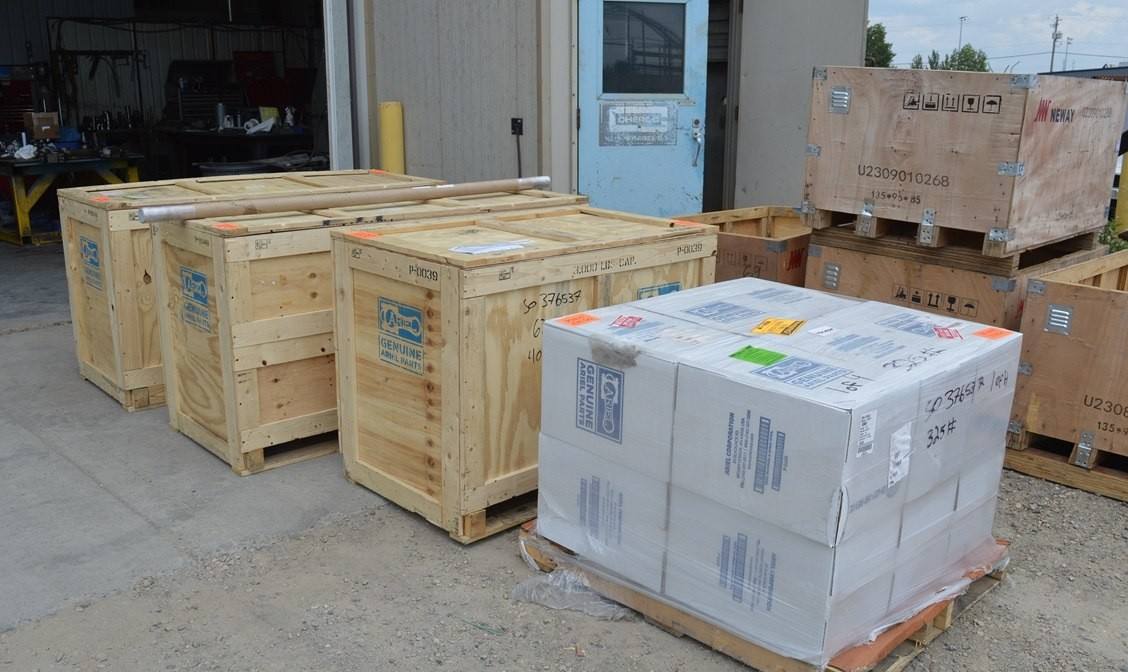
5. Match the packing to the transport
Road freight in Canada and the US
Good pallets or crates and secure strapping usually suffice.
Sea freight
Full corrosion protection, stronger crates, and packing for stacking and moisture in the container.
Air freight
Lighter packing to save cost, but still blocked and protected; dimensions and weight must match the air waybill.
Every CHR shipment includes a packing list and the documents agreed in the quote. Read ordering parts from Canada: a checklist and lead times for compressor and engine parts, or send your request on the quote form.
Frequently asked questions
What is ISPM 15?
An international standard for wooden packaging used in trade. The wood must be heat-treated or fumigated to kill pests and stamped with the official mark. Shipments in unmarked wood can be refused or held at the border.
How long does VCI protection last?
In a sealed bag or crate, typically many months to a few years, depending on the product and conditions. Once the bag is opened, protection stops, so open it only when the part is about to be installed.
Who pays for export packing?
It is usually included in or quoted with the supply. The Incoterms rule on the quote defines who is responsible for transport after the goods leave the supplier.
Have a part number or a nameplate photo?
Request a quote